How to Get a Personal Loan with No Collateral is a critical topic for anyone seeking financial assistance without the burden of collateral. Personal loans can serve various purposes, from consolidating debt to financing unexpected expenses. Understanding the nuances of unsecured loans, eligibility criteria, and the application process is essential for securing the funds you need without risking your assets.
In this comprehensive guide, we will explore what personal loans are, the differences between secured and unsecured options, and the specific steps you can take to increase your chances of approval. With the right knowledge and preparation, obtaining a personal loan without collateral can be a straightforward process that opens the door to financial freedom.
Understanding Personal Loans: How To Get A Personal Loan With No Collateral
Personal loans are a type of unsecured financing that allows individuals to borrow money for a variety of personal expenses. These loans are typically taken out for purposes such as consolidating debt, covering medical bills, or financing large purchases. Unlike secured loans, which require collateral such as a home or vehicle, personal loans do not require any assets to be pledged.The primary difference between secured and unsecured loans lies in the requirement of collateral.
Secured loans are backed by an asset that the lender can seize if the borrower defaults, while unsecured loans rely solely on the borrower’s creditworthiness. Common uses for personal loans without collateral include funding home improvements, paying for educational expenses, or covering unexpected emergencies.
Eligibility Criteria for No-Collateral Personal Loans, How to Get a Personal Loan with No Collateral
To qualify for a personal loan without collateral, borrowers typically need to meet specific eligibility criteria set by lenders. These requirements can vary by lender but generally include factors such as minimum income levels, employment stability, and a good credit history. A crucial aspect of the approval process is the credit score. Lenders evaluate credit scores to determine the risk of lending money.
A higher credit score often leads to better interest rates and terms. Additionally, lenders consider other factors such as the applicant’s debt-to-income ratio and overall financial stability when assessing loan applications.
Types of No-Collateral Personal Loans
There are several types of unsecured personal loans available to borrowers. Some of the most common include:
- Fixed-rate personal loans: These loans have a set interest rate and fixed monthly payments.
- Variable-rate personal loans: Interest rates can fluctuate based on market conditions.
- Peer-to-peer loans: These are funded by individual investors rather than traditional banks.
- Credit union loans: Often offer lower interest rates and more favorable terms than traditional banks.
When comparing different loan options, interest rates and terms can vary significantly. Below is a table summarizing features from various lenders:
| Lender | Interest Rate (APR) | Loan Amount Range | Repayment Terms |
|---|---|---|---|
| Lender A | 6.99% – 24.99% | $1,000 – $50,000 | 3 – 5 years |
| Lender B | 5.99% – 22.99% | $500 – $35,000 | 2 – 7 years |
| Lender C | 7.99% – 23.99% | $1,200 – $40,000 | 1 – 4 years |
Application Process
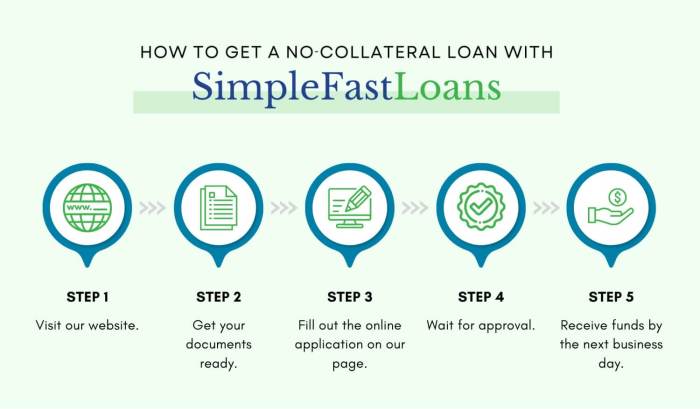
Applying for a no-collateral personal loan involves several key steps. The process typically includes:
- Researching lenders and comparing offers based on interest rates and terms.
- Checking your credit score to understand your eligibility.
- Gathering necessary documentation, such as proof of income and identification.
- Submitting the loan application online or in person.
- Waiting for the lender’s decision.
Essential documentation needed for the application often includes:
- Proof of identity (e.g., driver’s license or passport).
- Proof of income (e.g., pay stubs or tax returns).
- Bank statements to verify financial stability.
A checklist for applicants could include:
- Check credit score.
- Identify the purpose of the loan.
- Gather all required documents.
- Review lender requirements.
Improving Chances of Approval
Enhancing creditworthiness before applying for a personal loan can significantly increase the likelihood of approval. Strategies to consider include:
- Paying down existing debts to improve debt-to-income ratio.
- Making timely payments on current accounts to boost credit score.
- Limiting new credit inquiries before applying.
Presenting a strong loan application involves clearly articulating the purpose of the loan and demonstrating financial responsibility. Providing a budget plan can also reassure lenders of your ability to repay.
For those looking to secure financing, knowing the best options available is essential. That’s why you should check out the Top Mortgage Lenders in USA (2026 Review). This resource provides insights into reliable lenders, helping you make informed choices for your mortgage needs.
Understanding Loan Terms and Conditions
When reviewing loan agreements, it’s essential to understand key terms such as interest rates, repayment schedules, and any applicable fees. Common fees associated with personal loans can include:
- Origination fees charged by lenders for processing the loan.
- Late payment fees for missed deadlines.
- Prepayment penalties for paying off the loan early.
Understanding repayment terms is crucial as they dictate how much you’ll pay each month and over the life of the loan. Always read the fine print to avoid unexpected costs.
Selecting the right tools is crucial for business success. Therefore, understanding How to Choose the Right CRM for Your Business can help you align customer relationship management strategies with your specific needs. A well-chosen CRM system can foster better customer relationships and drive sales growth effectively.
Alternatives to No-Collateral Personal Loans
There are other financing options available for those who may not want to pursue a no-collateral personal loan. Alternatives include:
- Credit cards: Offer short-term borrowing with variable interest rates.
- Peer-to-peer lending: Connects borrowers directly with investors.
- Home equity loans: Use your home’s equity as collateral.
Each of these alternatives has its pros and cons. For example, credit cards can provide immediate access to funds but may come with high-interest rates, while peer-to-peer lending can be more flexible but may also involve fees.
Managing Loan Repayment
Effectively managing loan repayment is crucial to avoid default. Strategies include:
- Establishing a budget to allocate funds for loan payments.
- Setting up automatic payments to ensure timely repayments.
- Creating a repayment plan that Artikels monthly payment amounts and timelines.
A sample repayment schedule might look like this:
| Month | Payment Amount | Remaining Balance |
|---|---|---|
| 1 | $200 | $4,800 |
| 2 | $200 | $4,600 |
| 3 | $200 | $4,400 |
Proper budgeting and adherence to a repayment schedule can help maintain financial health and prevent future borrowing challenges.
Closure
In summary, successfully navigating the landscape of no-collateral personal loans requires diligence and a solid understanding of key factors such as creditworthiness, loan terms, and alternative financing options. By following the Artikeld steps and strategies, you can position yourself for a favorable outcome in your loan application process. Now equipped with this knowledge, you’re ready to take charge of your financial journey and make informed decisions that benefit your situation.
When exploring the best solutions for streamlining operations, consider the Best Inventory Management Software (2026 Guide) to enhance efficiency in tracking stock and reducing overhead costs. By utilizing cutting-edge technology, businesses can optimize their inventory processes significantly, making informed decisions that drive profitability.